
"A mega-power plant, a 4,000-megawatt offshore and coastal hybrid power plant, offers ultimate energy security by combining the Andaman sun and monsoon winds, eliminating electricity costs to zero. It's further enhanced by a 2,000-megawatt CCPP backup system, ensuring 24/7 operation of industrial plants and chipping estates."
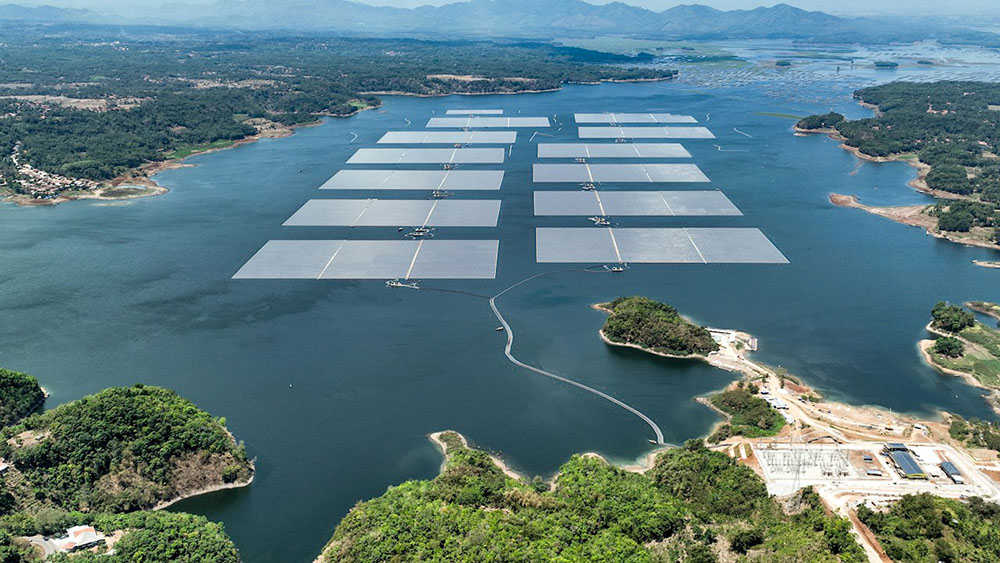
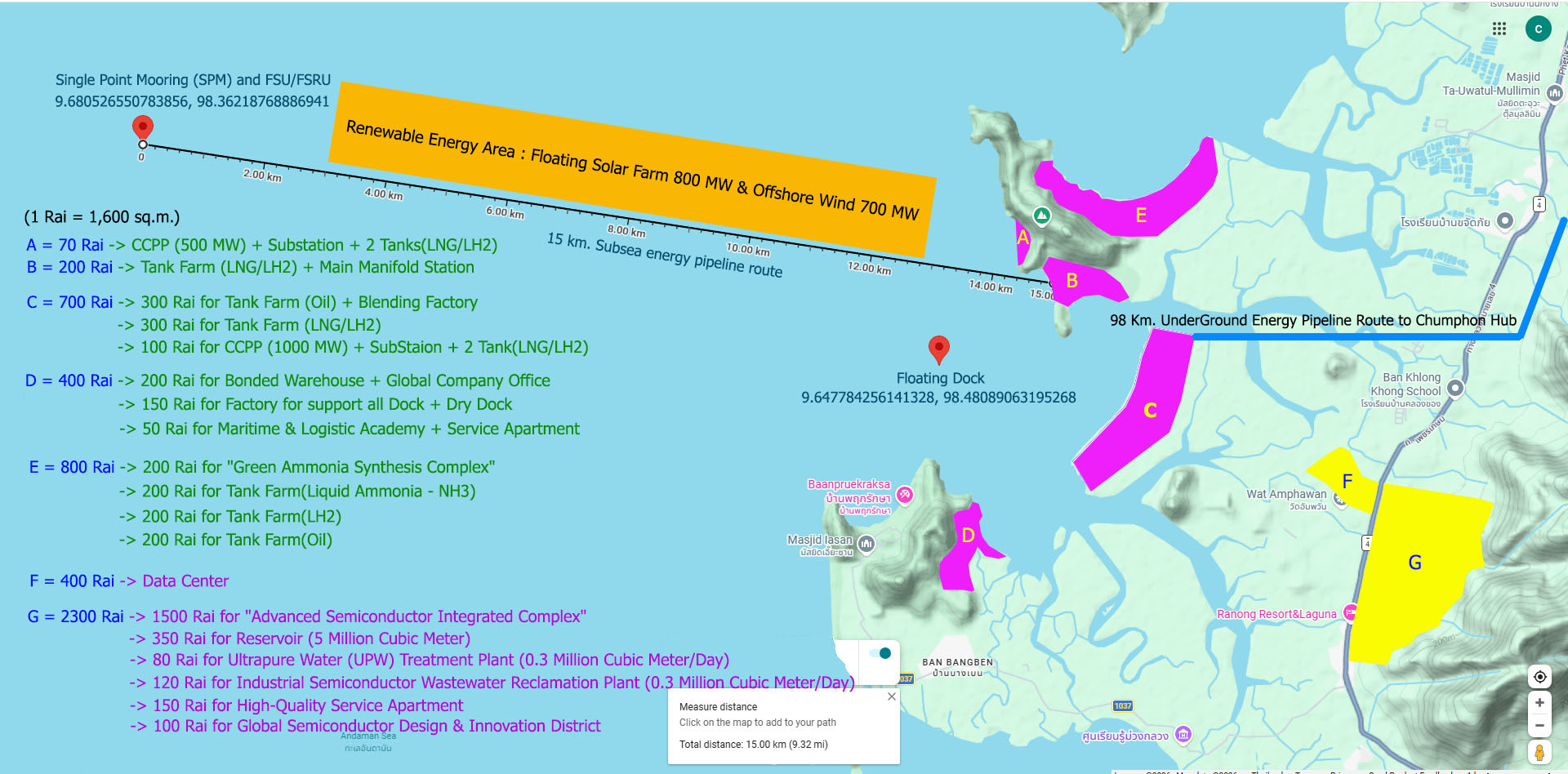
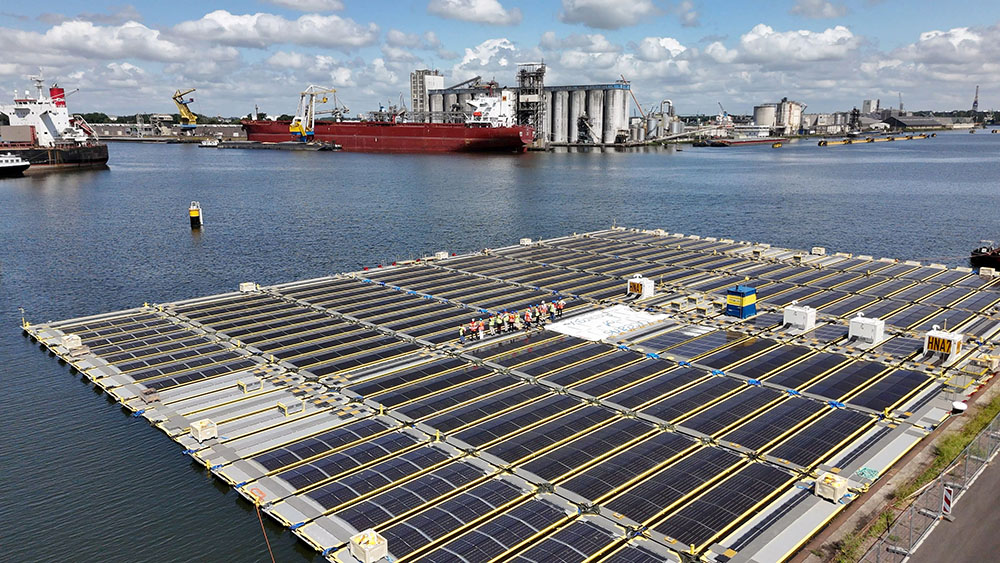
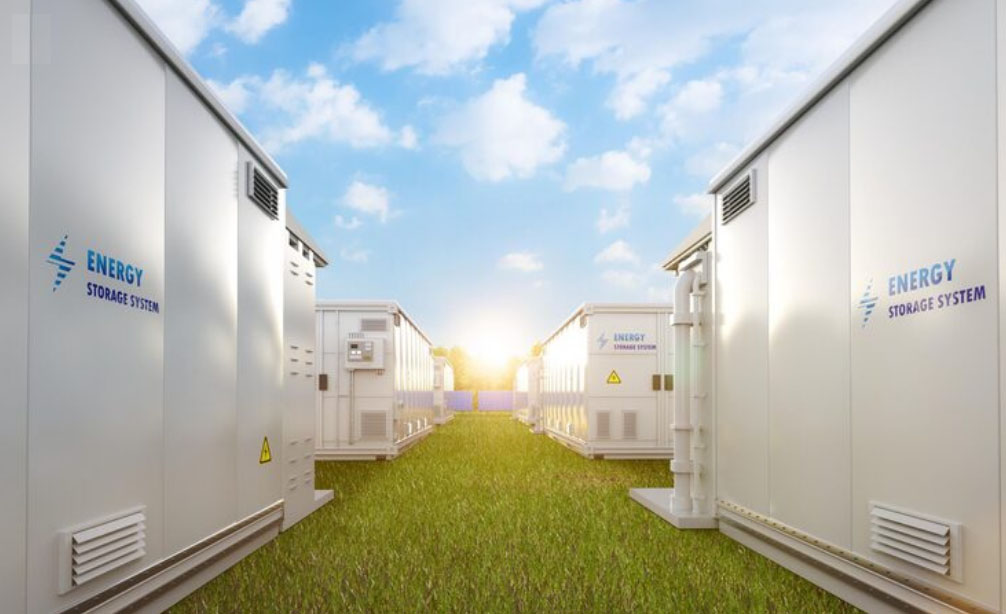
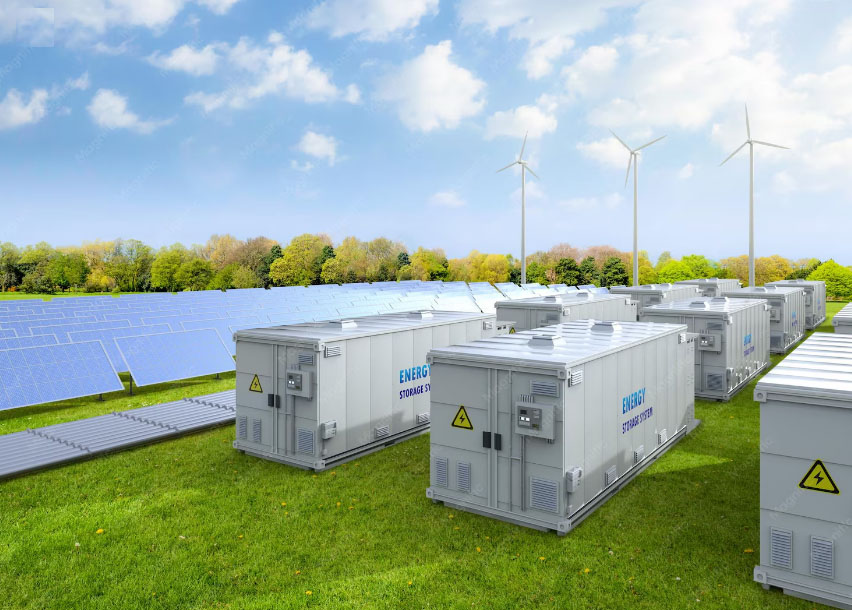
A 18 sq km area is designated for a 2,500 MW floating solar farm, laid along a 15 km underwater energy pipeline, along with a 1,500 MWh BESS (Battery Energy Storage System) backup system.

Project Information
- Project Name : Special Project: Hybrid Integrated Renewable Energy Complex (Floating Solar 2,500 MW + BESS 1,500 MWh) under the Ranong Green Energy Hub Strategic Plan (GBI Ranong Green Energy Hub).
- Target Customers :
- Captive & Internal Supply Chain : Green Hydrogen, Green Ammonia, and Green Fertilizer Complex Production Project (Ranong Hub)
- Industrial Estate : Ranong Industrial Estate and businesses requiring 100% clean energy (RE100).
- The international export market for energy and green chemicals. : Buyers in European countries (covering CBAM measures), Japan, and Australia use sea freight at the SPM buoy.
- Rationale :
The transition to gigawatt-scale clean energy requires managing electricity production costs (LCOE) as low as possible while maintaining 24/7 stability. Reliance on the national grid has limitations in terms of capacity and purchase agreements. Therefore, developing a 2,500 MW floating solar system combined with a 1,500 MW BESS (Battery Energy Storage System) and supplementing it with a 2,000 MW CCPP (CCU-Ready) captive/behind-the-meter base load is a strategic solution to overcome grid curtailment, converting surface solar energy from seawater into high-value green chemicals and fertilizers, creating a complete marine energy cycle and ecosystem.
Objectives :
1. To construct a 2,500 MW offshore floating solar power plant and a 1,500 MWh BESS energy storage system.2. To provide a low-cost, clean electricity source for the production of green ammonia, green hydrogen, and green fertilizer, without relying on the power grid.
3. To integrate marine infrastructure with a 15 km underwater pipeline and an artificial ecological reef.
Key Targets :
1. Installed power generation capacity (PV) : 2,500 MWp (generating approximately 4,400 – 4,800 million kWh/year)2. Battery Energy Storage System (BESS) : 1,500 MWh for managing peak shifting during the evening.
3. Base Load Energy Security : CCPP 2,000 MW (1,000 + 1,000 MW) supports 24-hour operation of the electrolyzer.
4. Carbon Targets : Reduce greenhouse gas emissions by more than 3.5 million tons of CO2eq per year.
Key Requirements :
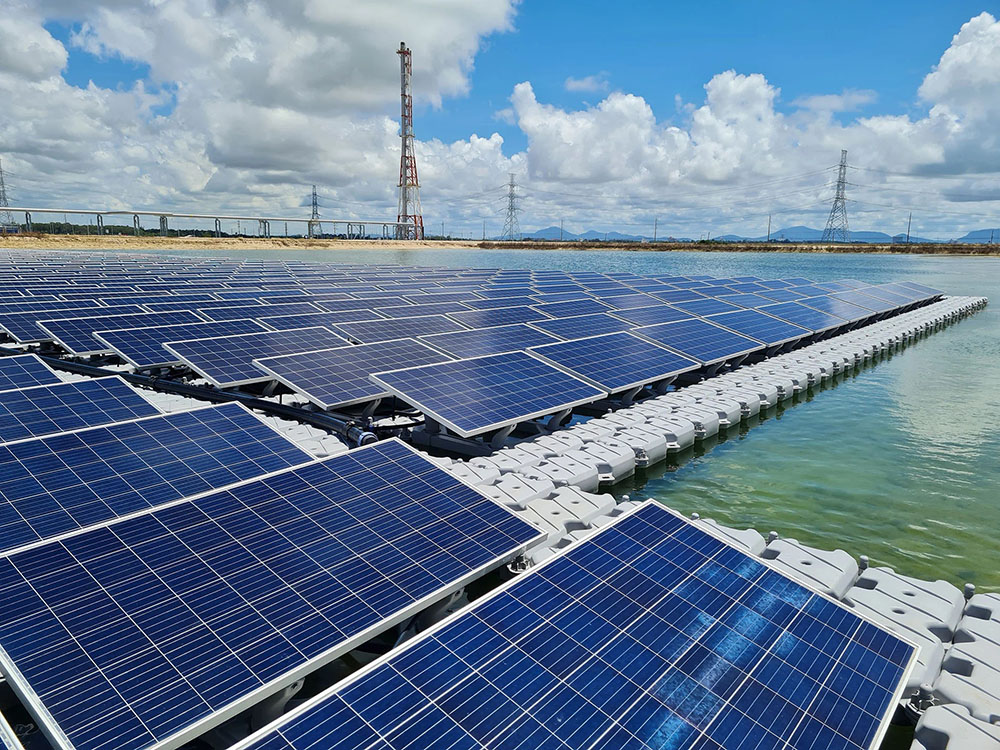
1. solar panels : N-Type HJT Bifacial Double-Glass (700W+) Salt Spray Standard IEC 61701 Severity Level 62. Buoy and anchor system : HDPE food-grade/marine-grade buoys with a lifespan of 25–30 years. Anchor cables are used to secure the buoys to underwater concrete tunnels.
3. Electrical and transmission systems : IP68 Marine-Grade Inverter & Transformer with High-Voltage Subsea HVDC Cable routed through a concrete tunnel to the shore.
Location/Area :
- Marine waters : Andaman Sea, area of the underwater energy pipeline from the coast to the SPM buoy (15 km distance), Ranong Province.
- Water depth : 6 to 18 meters (At Lowest Astronomical Tide)
- Area size : 1.5 km wide × 12 km long floating solar farm, covering a total area of approximately 18 square kilometers (~11,250 rai)
Budget :
- Estimated investment budget : Approximately 105,000 million baht (in Thai baht)
Timeline :
- Construction and Installation Period : 36 months
- Commercial Operation Start (COD & Operation) : From Year 5 onwards (Projected payback period of the project is 7.2 years, with a payback period of just 3.2 years after the COD begins)
Responsible Parties :
- Main Project Developer : Golden Bridge International Holding (Thailand) Co., Ltd. (GBI Holding) in partnership with a group of world-class marine energy engineering specialists (Tier-1 EPC Contractors)
Expected Outcomes :
1. The construction of the largest offshore clean energy production facility in the ASEAN region will enhance energy security and the green chemical industry for Ranong hub.2. The cost of producing green hydrogen and green fertilizer has decreased to a level competitive in the global market without the burden of grid curtailment.
3. The creation of a 15-kilometer-long artificial coral reef on the concrete culvert will restore the marine ecosystem and serve as a natural habitat for aquatic life.
4. The project will generate significant investment value in the southern region, enhancing Thailand's competitiveness as a center for clean energy and low-carbon economy in the region.